Introduction
The morning coffee ritual looks different for everyone. Some people find meditation in the slow pour of a French press, while others appreciate the simplicity of grabbing a ready-made cup before rushing out the door. For those who fall somewhere in between—people who want quality coffee without the complexity, convenience without sacrificing taste—single-serve brewers have become a practical solution in countless kitchens.
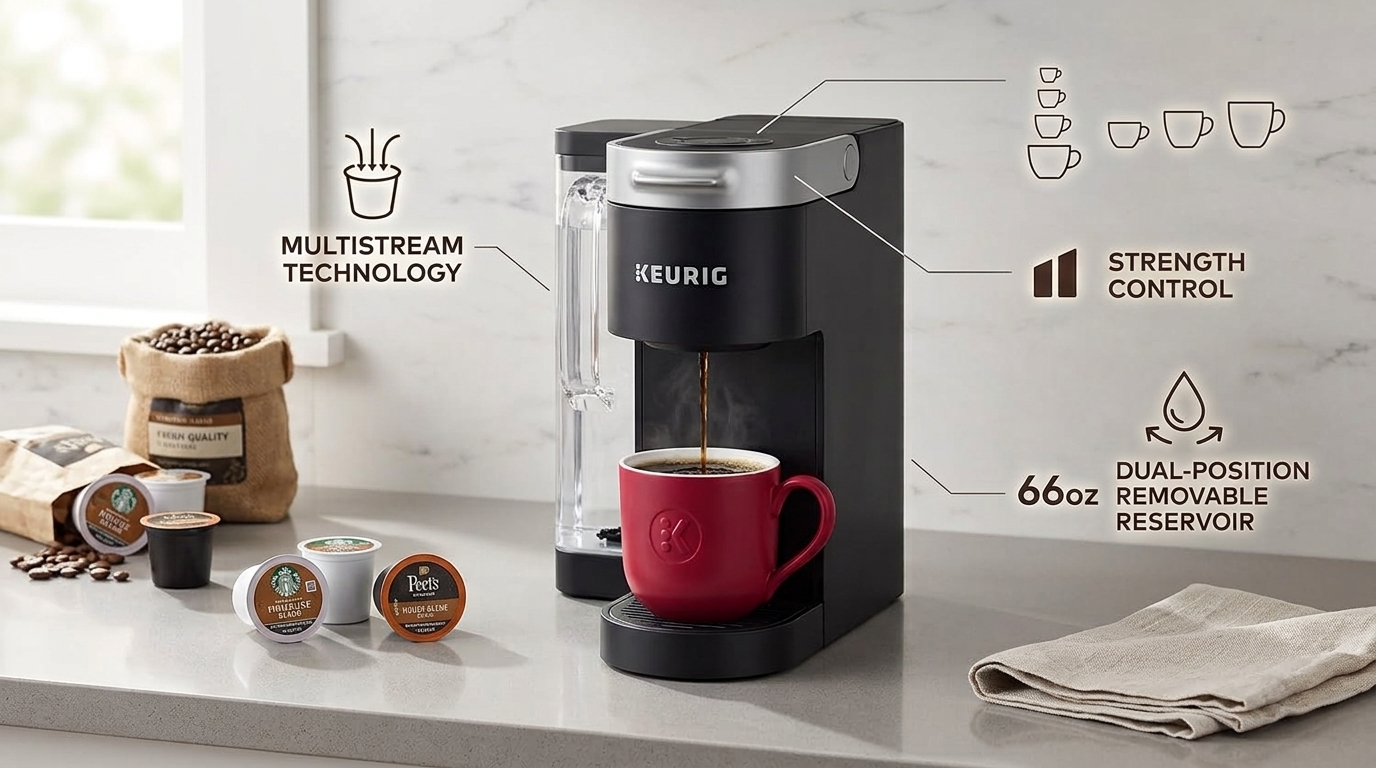
The Keurig K-Supreme represents one approach to this category of coffee makers. With its MultiStream Technology, adjustable brew sizes, and dual-position removable reservoir, it addresses several pain points that coffee drinkers have mentioned over the years. But like any appliance designed to streamline your morning routine, understanding what it actually does, how it works, and whether it fits your lifestyle requires looking beyond the marketing language.
This article examines the K-Supreme’s features, explores practical scenarios where it might be useful, and discusses what prospective users should genuinely consider before deciding if this particular appliance makes sense for their situation. We’ll look at the mechanics of how it functions, who might benefit from its specific design choices, and how it compares to other approaches for making coffee at home.
Key Features and How They Work
MultiStream Technology Explained
The K-Supreme’s MultiStream Technology represents the machine’s primary distinguishing feature. To understand what this means in practical terms, it helps to know how traditional single-serve brewers work.
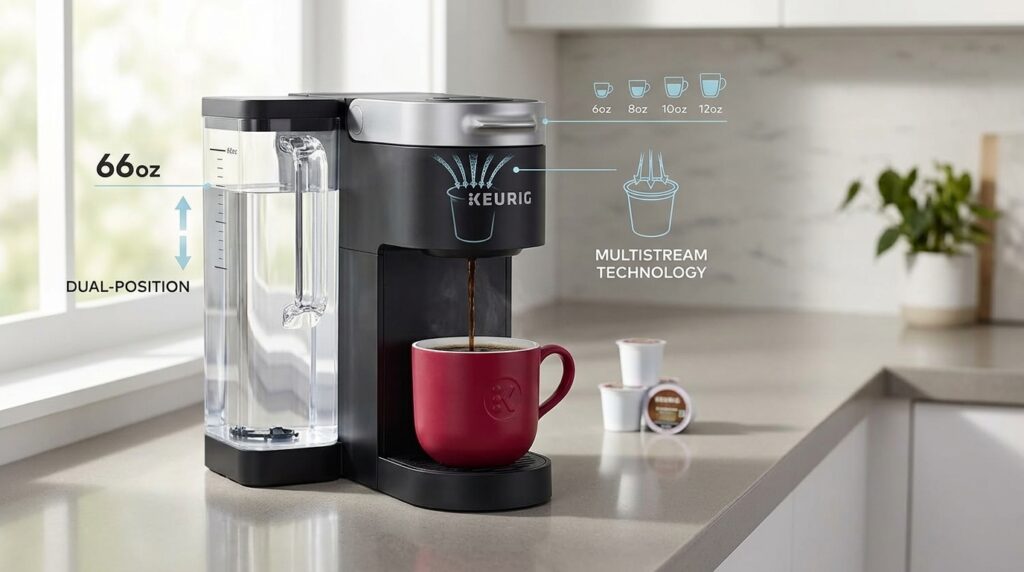
Most basic single-serve machines operate by forcing hot water through a pod in a single concentrated stream, much like a traditional espresso machine but without the pressure. MultiStream Technology, by contrast, distributes water through multiple points across the pod during the brewing cycle. The intention behind this approach is to achieve more even water distribution, which can result in more consistent extraction of the coffee’s flavor compounds.
In theory, this should mean fewer instances of under-extracted coffee (which tastes weak or sour) or over-extracted coffee (which tastes bitter). Whether this produces a noticeable difference depends partly on the coffee itself and partly on individual taste preferences. Someone accustomed to high-quality, freshly ground coffee might notice refinements in flavor, while others might not detect significant differences in their morning cup.
Brew Size Flexibility
The K-Supreme offers four different brew size options. This feature addresses a common frustration with single-serve machines: a one-size-fits-all approach doesn’t account for the fact that people have different caffeine needs and prefer different cup sizes.
The four size options typically accommodate everything from a small concentrated brew of around 6 ounces to a larger standard cup of 12 ounces, with intermediate options in between. For households where some people drink smaller morning coffees while others prefer larger afternoon refills, this flexibility can reduce waste and allow people to prepare exactly what they want without forcing a compromise between family members’ preferences.
The Dual-Position Reservoir System
The removable reservoir on the K-Supreme can be positioned in two different ways, which sounds like a small detail but addresses a specific practical concern. Some kitchen configurations have limited space above or beside the machine. By allowing the reservoir to move between positions, the machine becomes adaptable to different countertop layouts and cabinet configurations.
The 66-ounce capacity means the reservoir holds enough water for multiple brewing cycles without requiring constant refilling. This is particularly relevant for households where multiple people will be making coffee in sequence during morning hours. The reservoir being removable (rather than built-in) also simplifies cleaning and refilling compared to machines where you must pour water into a fixed tank.
Temperature and Extraction Settings
Beyond the standard brew features, many users appreciate that single-serve machines allow for adjustments in brewing temperature and extraction time. The K-Supreme includes options in this area, though the specific controls available vary by model year. These settings allow for some customization of how the machine processes the pod, potentially affecting the final cup’s flavor profile.
How Different People Use Single-Serve Coffee Makers
The Office Professional Working From Home
For someone managing work calls and meetings from a home office, a single-serve brewer offers immediate appeal. The ability to prepare a fresh cup in under three minutes without leaving the desk represents genuine productivity value. The multiple size options mean someone might brew a smaller cup mid-morning, a standard cup around noon, and another option mid-afternoon—each sized appropriately for when they’ll actually drink it.
The consistency aspect also matters in this scenario. Someone on their fourth video call of the day doesn’t want to deal with variables like water temperature or brewing time. A machine that delivers similar results each time reduces friction from the process.
Households With Varied Coffee Preferences
Not every household has one coffee person making one type of coffee. Some families have early risers and late risers, some people prefer regular coffee while others want decaf, and some family members might want a smaller cup while others prefer larger servings.
A traditional coffee maker designed to brew a full pot doesn’t serve this situation well. Someone who wants one cup at 6 AM doesn’t want to brew a full 12-cup pot. Single-serve machines eliminate this mismatch. The K-Supreme’s four size options further support this scenario by allowing each person to set exactly what they need without waste.
Dorm Rooms and Small Apartments
Space constraints make full-size coffee makers impractical for many living situations. A single-serve brewer occupies less countertop real estate and addresses the core need—getting coffee into a cup—without requiring extensive kitchen infrastructure. Students and young professionals in shared housing often appreciate this practicality.
Social Gatherings
When hosting friends or family, having a brewer that can quickly prepare individual cups as people arrive or as preferences emerge during an event offers genuine convenience. Rather than brewing a full pot upfront (where some coffee might sit and cool), you can prepare fresh cups on demand. For hosts who enjoy being attentive to guests’ preferences, this approach allows for personalization.
People With Limited Mobility or Dexterity Concerns
Some users appreciate single-serve brewers for accessibility reasons. Compared to pouring water into a traditional brewer and managing a coffee pot, the single-serve model involves simpler, more contained movements. The removable reservoir of the K-Supreme specifically addresses this by eliminating the need to pour water into a built-in tank.
Practical Considerations Before Making a Decision
The Environmental Impact of Pod Systems
The most substantive criticism of single-serve pod-based brewing systems concerns waste. Each K-Cup pod represents a small piece of plastic, aluminum, and coffee grounds that requires disposal. Over time, a household using daily single-serve pods generates material that ends up in landfills.
This reality doesn’t mean the choice is automatically problematic—it means understanding your actual habits and making an informed decision. If you currently brew a full pot of coffee and discard half of it daily, switching to single-serve might actually reduce overall waste. Alternatively, if environmental impact weighs heavily on your priorities, you might consider this factor significant enough to rule out pod systems entirely in favor of pour-over methods, French presses, or other approaches.
Various companies have introduced recyclable and compostable pods, and some communities have established collection programs for used pods. Understanding what options exist in your specific location helps determine the actual environmental footprint of your choice.
Ongoing Costs and Supply Considerations
Single-serve brewers involve recurring purchases of pods. While this cost can be reasonable for occasional use, households where everyone uses the machine daily might find the per-cup cost adds up over months and years. Traditional coffee makers or pour-over methods typically cost less per serving, though they require more manual effort.
Additionally, pod availability can vary. If you develop a preference for particular flavors or brands, you’ll need to ensure they remain in stock at retailers you use. Unlike ground coffee where virtually every brand makes multiple varieties, pod selection, while broad, still has limits.
Cleaning and Maintenance Requirements
Single-serve brewers are generally simpler to maintain than traditional machines, but they still require periodic cleaning. Mineral deposits from water can accumulate in the internal passages, potentially affecting performance. Most manufacturers recommend running a cleaning cycle (usually involving a special cleaning pod or vinegar solution) every few months.
The removable reservoir of the K-Supreme makes some of this maintenance easier—you can clean it thoroughly without disassembly. However, the internal brewing chamber still requires attention over time. Understanding whether you’ll actually perform these maintenance steps affects how well the machine will function long-term.
Space and Aesthetic Factors
While single-serve brewers are compact compared to traditional coffee machines, they still occupy countertop space. The K-Supreme’s footprint is reasonable, but if your kitchen has limited counter space, even a modest machine might feel like it’s taking up valuable real estate. Additionally, appliance color and design matter to some households. The black finish of this model fits easily into most kitchen aesthetics, but whether it complements your specific space is an individual consideration.
Water Quality in Your Area
Hard water (water with high mineral content) can affect any coffee maker but is particularly relevant for single-serve systems where smaller internal passages can accumulate deposits more noticeably. If you live in an area with very hard water, you might need to either use filtered water or plan for more frequent cleaning cycles than someone with naturally soft water would require.
Noise Level During Operation
Single-serve brewers make noise during the brewing cycle—the sound of the pump and heating elements. For some households, this is a non-issue. For others, particularly those with light sleepers or quiet preferences, knowing the decibel level matters. The K-Supreme produces typical noise levels for its category, but if noise sensitivity is a concern, it’s worth checking specifications before purchasing.
Comparing Approaches to Coffee at Home
When considering whether a single-serve brewer makes sense, it helps to understand how different brewing methods actually differ. This isn’t about declaring one approach superior—it’s about understanding real trade-offs.
Traditional Drip Coffee Makers: These brew larger quantities at a lower per-cup cost. They require less active attention during brewing but typically brew everything at once, which can lead to waste if not all the coffee is consumed promptly. They’re excellent for households where multiple people want coffee simultaneously, but less ideal for varied preferences or timing.
Pour-Over Methods: These offer excellent control over brewing variables and often produce a quality cup that satisfies coffee enthusiasts. However, they require more active participation in the brewing process—manual water pouring and timing. They work well for people who enjoy the ritual aspect of coffee making but don’t suit someone seeking maximum convenience.
French Press: These produce a full-bodied cup and require no electricity or filters. They’re inexpensive and elegant. However, they’re slower than single-serve machines, involve some cleanup of sediment, and aren’t ideal for individual preference variations within a household.
Single-Serve Brewers: These excel at speed, individual customization, and convenience. They don’t require the ritual participation of pour-over methods or the cleanup of French presses. However, they generate more waste than other methods, involve ongoing pod purchases, and the per-cup cost can be higher. They also don’t produce the same flavor profile that coffee enthusiasts might achieve with more manual methods.
Each approach involves genuine trade-offs. The “best” choice depends entirely on your priorities, lifestyle, household situation, and values.
Who Might Find This Machine Particularly Useful
Busy Professionals: People managing demanding schedules appreciate the speed and convenience. The ability to prepare a single perfect cup in minutes supports busy mornings without requiring advance planning.
Remote Workers: Those managing work from home benefit from the on-demand fresh coffee without leaving their workspace. The consistency helps establish routine even within a home environment.
Retirees and Empty Nesters: Households with one or two people don’t need full pots of coffee. Single-serve machines eliminate the waste of cooking full batches for smaller households.
People With Inconsistent Schedules: When family members keep different hours (shift workers, students, early risers, late risers), a machine that serves individual needs at any time removes scheduling conflicts around coffee preparation.
Visitors and Entertaining: Those who frequently host small gatherings appreciate being able to prepare fresh cups as needed rather than brewing upfront.
Coffee Drinkers With Limited Mobility: The accessibility features, particularly the removable and repositionable reservoir, can make the machine more practical than alternatives requiring more complex handling.
Frequently Asked Questions
How long does it take to brew a cup? Most single-serve brewers complete a cup in around two to three minutes, depending on the brew size selected and whether the water has been preheated. The K-Supreme’s specifications indicate brewing times within this typical range.
Can you use any K-Cup pod, or only specific brands? The K-Cup system is designed to work with any officially licensed K-Cup pod, meaning you have flexibility with brand selection. However, not every coffee style or brand available in traditional formats has a pod version. Some premium specialty coffees only come in loose grounds, which wouldn’t be compatible with pod systems.
Do you need special water, or can you use tap water? Tap water works fine in single-serve brewers. However, if your tap water is very hard or has noticeable taste characteristics, using filtered water might improve results. Some people use distilled water specifically to avoid mineral buildup, though this is more about maintenance convenience than brewing quality.
What makes the MultiStream Technology different from regular brewing? The multiple stream approach distributes water across the pod more evenly, potentially extracting coffee flavor more consistently. Whether you’ll notice the difference depends on your coffee preferences and palate sensitivity. Some people find it produces noticeably better results; others perceive no difference.
How often should you clean the machine? Most manufacturers recommend a cleaning cycle every three to six months, depending on water hardness in your area. Cleaning involves running water through a cleaning pod or solution, similar to a regular brewing cycle. The reservoir and other removable parts should be rinsed regularly.
Is the machine loud? Single-serve brewers produce noise during the brewing cycle from the pump and heating elements. The K-Supreme falls within typical noise levels for this category, but if you’re sensitive to kitchen appliance noise or have someone sleeping nearby during morning brewing, it’s worth considering this factor.
What’s the learning curve like? Single-serve brewers are generally intuitive. You insert a pod, select your preferred brew size, and start the machine. The control panel is straightforward. Learning to customize settings for temperature or extraction time takes minimal effort, usually covered in the instruction manual.
Do you get the same flavor consistency every time? Single-serve machines can produce more consistent results than manual methods because the variables (water temperature, contact time, pressure) are controlled by the machine rather than by individual user actions. However, the actual coffee quality depends on the pod’s freshness and quality. Different brands and varieties of pods will still taste different from each other.
What if you don’t have counter space? The K-Supreme is relatively compact for a coffee machine, but it still requires dedicated space. If counter space is extremely limited, a pour-over setup or stovetop brewer might take up less permanent space, though they’d require different handling during use.
Can it make multiple cups at once? Single-serve brewers make one cup at a time. If multiple people want coffee simultaneously, you’d need to brew sequential cups or have an alternative brewing method available.
Conclusion
The Keurig K-Supreme represents one approach to addressing a common household need: getting coffee into a cup conveniently. Its MultiStream Technology, multiple brew sizes, and flexible reservoir positioning reflect design choices intended to improve on basic single-serve brewing. Whether these specific features and the single-serve approach generally align with your lifestyle depends on your individual situation—your schedule, household composition, kitchen space, environmental values, and coffee preferences.
This isn’t a machine that’s universally appropriate or universally inappropriate. It’s a tool that works well for specific use cases and might be less ideal for others. Understanding your actual needs—not what sounds appealing in marketing language, but what you actually do and what genuinely matters to you—provides the foundation for making a decision that you’ll feel good about over time.
The single-serve coffee category exists because convenience matters to many people, and speed in the morning has real value. The environmental impact of pods is also real and worth taking seriously if that’s a priority for you. Both perspectives are valid. Your decision should reflect which set of factors weighs most heavily in your specific circumstances.