Introduction
Coffee consumption remains one of the most common daily rituals in households across North America. The way people prefer to drink their coffee, however, continues to vary significantly. Some mornings call for a quick single cup before work, while weekend gatherings might benefit from an entire carafe. Others appreciate iced coffee during warmer months or at different times of day. These varying preferences have created an interesting market for coffee makers that can adapt to different brewing needs without requiring multiple appliances.
The Keurig K-Duo represents one approach to solving this flexibility challenge. As a dual-function machine, it attempts to bridge the gap between single-serve convenience and traditional carafe brewing, a positioning that appeals to households with diverse coffee preferences. Understanding what this machine offers—and equally important, what it doesn’t—can help you determine whether it aligns with your specific coffee needs.
This article explores the Keurig K-Duo in detail, examining its features, functionality, practical applications, and important considerations for potential users.
What Is the Keurig K-Duo?
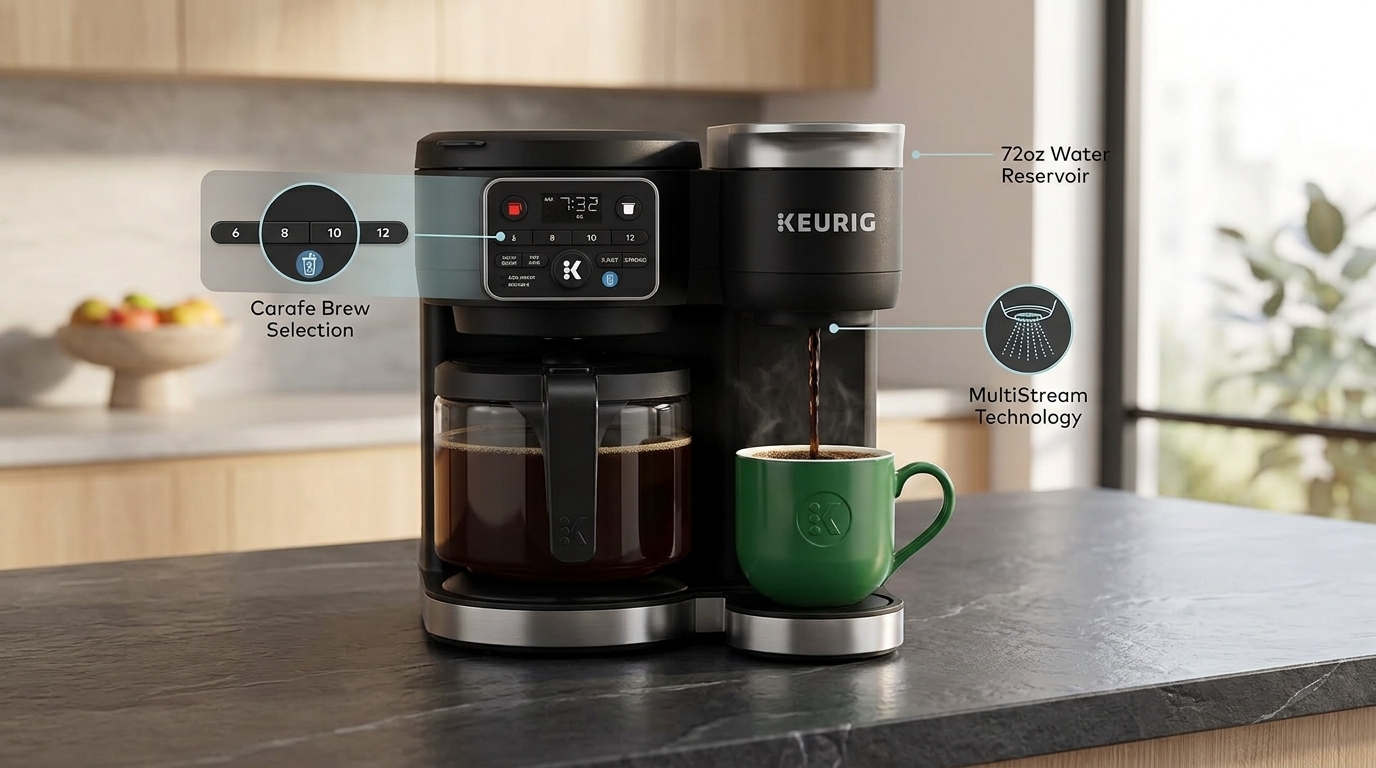
The Keurig K-Duo is a coffee maker designed to function in two distinct ways. On one side, it operates as a single-serve brewer using K-Cup pods, allowing individuals to prepare individual cups of coffee quickly. On the other side, it includes a traditional carafe function, enabling users to brew a larger quantity of coffee at once. The machine includes a 72-ounce reservoir, which provides sufficient capacity for both brewing methods without constant refilling.
The “Gen 2” designation indicates this is the second generation of this particular model line, incorporating refinements and improvements over its predecessor. The inclusion of “MultiStream Technology” is a specific feature designed to enhance the brewing process, which we’ll examine in greater detail.
This dual approach distinguishes the K-Duo from machines that focus exclusively on single-serve brewing or traditional carafe brewing, making it a proposition for households where coffee preferences don’t follow a single pattern.
Key Features and How They Function
Single-Serve K-Cup Brewing
The single-serve side of the K-Duo operates using K-Cup pods, the proprietary single-serving coffee containers that Keurig pioneered. Users insert a K-Cup pod into the designated chamber, select their desired cup size (typically ranging from 6 to 12 ounces, depending on the specific model configuration), and initiate brewing.
The K-Cup system offers significant convenience advantages. The pods are pre-measured and pre-ground, eliminating the need for manual measuring or grinding. They come in numerous varieties, from various coffee roasts and origins to flavored options and non-coffee beverages. This variety means different household members can prepare their preferred beverages without conflict—one person might choose a light roast while another selects a darker option, all from the same machine.
The speed of single-serve brewing also appeals to people with time-constrained mornings. Most K-Cup preparations complete within a few minutes, including the machine’s warm-up time if it’s been idle.
Carafe Brewing Capability
The carafe side of the K-Duo functions as a traditional drip coffee maker. Users add ground coffee to a filter basket and water to the reservoir, then select the carafe brewing option. The machine brews an entire pot of coffee, typically producing between 48 to 60 ounces depending on the fill level and specific brewing settings.
Carafe brewing accommodates different approaches to coffee preparation. Some people prefer using ground coffee from bags they’ve selected themselves, whether from local roasters, bulk purchases, or specialty suppliers. Others appreciate the flexibility to experiment with different brewing ratios or adjust strength by modifying the amount of ground coffee used.
MultiStream Technology
MultiStream Technology represents Keurig’s approach to improving water distribution during the brewing process. Rather than having water pour through the coffee grounds in a single stream, this technology disperses water across multiple streams. The intended benefit involves more even saturation of the coffee grounds, potentially leading to more consistent extraction and flavor development.
This feature applies primarily to the carafe brewing function. The theory behind improved water distribution is sound—uneven water flow can result in some grounds over-extracting while others under-extract, potentially creating an unbalanced cup. By dispersing water more evenly, the machine aims to create more uniform brewing.
The 72-Ounce Reservoir
The reservoir capacity of 72 ounces provides meaningful convenience. This size allows for multiple brewing cycles without needing to refill between uses. For a household brewing single-serve cups throughout the morning, the reservoir won’t require refilling between each cup. For carafe brewing, a 72-ounce reservoir accommodates a full pot with room to spare, eliminating the need to refill for back-to-back brewing sessions.
Larger reservoirs do require consideration regarding space and counter footprint, as they contribute to the machine’s overall size. However, for many users, the convenience advantage outweighs the space consideration.
Temperature Control for Iced Beverages
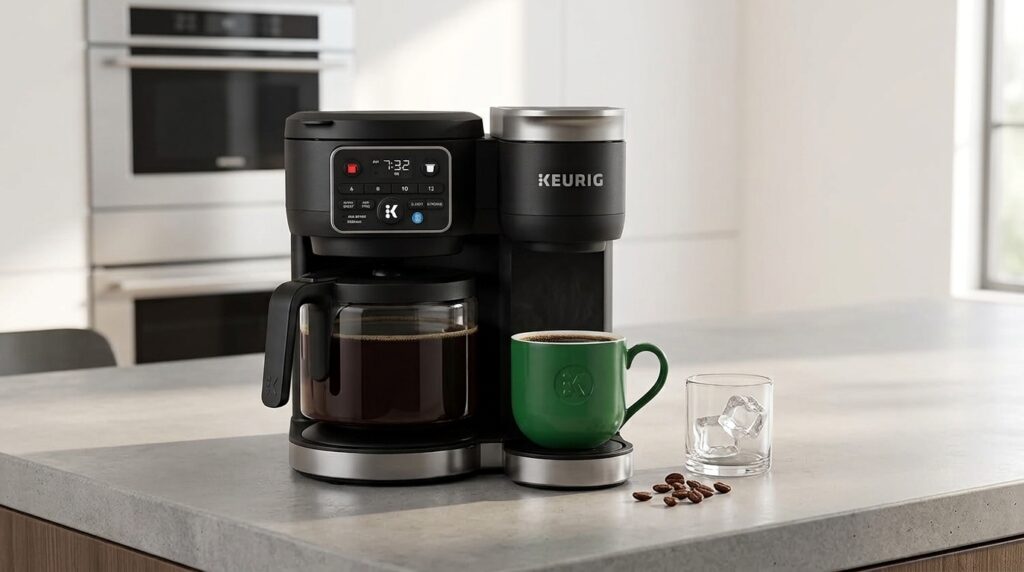
The “Hot & Iced” designation indicates the machine can brew coffee specifically intended for iced consumption. Rather than brewing hot coffee and then adding ice—which dilutes the coffee as the ice melts—this function brews a concentrated version that maintains flavor even after ice and additional liquid are added.
This capability reflects changing beverage preferences, as iced coffee consumption has grown substantially over recent years, no longer limited to warm-weather seasons. The ability to prepare iced coffee from the same machine that makes hot coffee eliminates the need for a separate brewing process or appliance.
Practical Applications and Usage Scenarios
The Solo Commuter
An individual living alone who typically drinks one cup of coffee before leaving home represents an ideal scenario for the single-serve function. The K-Cup side offers minimal cleanup, requires no waste of unused coffee, and provides speed and convenience. Switching to this brewing method takes seconds, and cleanup involves simply disposing of the used pod.
The Mixed-Preference Household
Households where different members have different coffee preferences benefit from the dual-brewing capability. One household member might want a 10-ounce cup of flavored coffee, while another prefers a smaller 6-ounce serving of a different variety, and a third wants a large mug of a premium dark roast. The K-Duo accommodates all these preferences without requiring anyone to wait for a full carafe to brew.
Weekend Entertaining
When hosting guests or gathering with family on weekends, the carafe function shines. Rather than brewing individual K-Cups for multiple people—which is time-consuming and generates pod waste—the carafe function can prepare coffee for several people simultaneously. This scenario appeals to people who entertain regularly or have larger families gathering for weekend breakfasts.
The Flexible Work-from-Home Professional
Someone working from home during the week might use single-serve brewing on regular weekdays when their schedule is tight and unpredictable. However, on slower days or when they have flexibility, they might appreciate brewing a carafe to keep on hand throughout the morning, refilling their mug as needed without returning to the machine repeatedly.
Office Break Rooms
Some small offices use the K-Duo in shared break rooms, as it accommodates both people who want a quick personal cup and those who prefer having a larger pot available for the team to access throughout the day.
Who This Machine May Be Suitable For
Several characteristics suggest which users might find the K-Duo particularly practical:
Households with diverse preferences. If your household includes people who like different coffee types, strengths, or serving sizes, the dual-brewing flexibility addresses this without compromise.
People with variable daily routines. Those whose mornings differ significantly—sometimes rushing out the door, sometimes enjoying a leisurely breakfast at home—benefit from having both quick single-serve and more traditional carafe options available.
Individuals who value convenience. The K-Cup system prioritizes speed and simplicity, appealing to those willing to accept the trade-offs inherent in pre-packaged pods for the sake of minimal preparation and cleanup.
Coffee enthusiasts exploring different methods. While K-Cups do limit freshness compared to grinding immediately before brewing, the carafe side allows experimentation with different ground coffees, potentially appealing to people interested in exploring various origins and roasts.
Those with limited kitchen space who need versatility. Combining two brewing methods into one machine saves space compared to purchasing separate single-serve and carafe machines.
Households that entertain moderately. Regular hosts benefit from the ability to brew multiple cups efficiently without requiring dedicated entertaining-specific equipment.
Important Considerations and Practical Realities
The K-Cup Pod Factor
Using K-Cups involves ongoing supply purchases and generates plastic waste, even though pod manufacturers have made efforts toward recyclability. For environmentally conscious users, this aspect represents a significant consideration. While reusable K-Cup filters exist as alternatives, they require manual filling with ground coffee, which somewhat defeats the convenience advantage of the K-Cup system.
Machine Footprint and Counter Space
The K-Duo is a larger appliance than either a single-serve brewer or traditional coffee maker alone. Its dual functionality requires additional internal components, resulting in a machine that occupies meaningful counter space. For kitchens with limited counter real estate, this represents a genuine trade-off to consider.
Water Quality and Maintenance
Like most coffee makers, the K-Duo benefits from proper maintenance. Hard water can lead to mineral buildup, which may eventually affect brewing performance. Manufacturers typically recommend periodic descaling—using a descaling solution to remove mineral deposits from internal components. The frequency depends on your local water hardness. This maintenance isn’t unique to the K-Duo but remains an important consideration for long-term reliability.
Temperature and Flavor Consistency
Different brewing methods produce subtly different flavor profiles. The single-serve K-Cup system and the carafe system, even on the same machine, may produce noticeably different results depending on the coffee variety and how each side is configured. This isn’t a flaw but rather a characteristic of the different brewing approaches, something users generally adapt to quickly.
The Learning Curve
While neither brewing method is complicated, new users need to familiarize themselves with operating both sides of the machine, understanding the different options available, and recognizing which method suits different situations. Most users report this becomes second nature quickly.
Pod Availability and Variety
The availability of K-Cup pods has expanded significantly, with numerous brands and varieties available. However, the selection remains more limited than the options available for traditional ground coffee from bags. Some specialty coffee roasters don’t offer K-Cup compatible options, potentially limiting choices for certain coffee preferences.
How Dual-Brewing Coffee Makers Compare to Other Categories
Versus Single-Serve-Only Machines
Single-serve-only machines offer simplicity and compact size. They excel for individuals living alone or households where nearly everyone wants a quick single cup. However, they lack the carafe option for preparing multiple cups simultaneously, and the per-cup cost tends to be higher than bulk carafe brewing.
The K-Duo’s carafe function addresses the limitation of single-serve-only machines when larger quantities are needed, though at the cost of increased size and complexity.
Versus Traditional Carafe-Only Machines
Traditional drip coffee makers excel at batch brewing and typically cost less than dual-function machines. They’re often simpler, with fewer components and lower failure rates. However, they lack the single-serve convenience option, meaning someone wanting a quick personal cup while others are still sleeping must either brew a full carafe or use a separate method.
The K-Duo’s single-serve function addresses this limitation, though users must accept the K-Cup dependency and accept the trade-off of a larger machine.
Versus Semi-Automatic Espresso Machines
Some households consider semi-automatic espresso machines, which offer more control over brewing parameters and often produce drinks with more depth. However, these machines require more skill, generate more cleanup, and demand more time investment. The K-Duo prioritizes convenience over control, appealing to different values and priorities.
Versus Programmable Brewing Machines
Some higher-end coffee makers offer programming features, allowing users to set a specific time for brewing to begin. This means waking up to fresh coffee automatically. The K-Duo doesn’t emphasize this feature as strongly as some alternatives, though some users may find this a significant limitation depending on their morning routines.
Frequently Asked Questions
How long does it take to brew using the K-Cup side?
Most K-Cup brewing cycles complete within 2 to 3 minutes, depending on cup size. This includes the machine’s warm-up time if it hasn’t been used recently. The first brew of the day may take slightly longer than subsequent brews.
How long does carafe brewing take?
Carafe brewing typically requires 8 to 12 minutes, depending on the water amount and machine temperature. This is comparable to traditional drip coffee makers.
Can I use the carafe side with the machine’s hot water function to brew tea or other hot beverages?
Some machines of this type include a hot water dispense function that can be used for tea, instant coffee, or other hot beverages. Specific capabilities vary by model, so checking the product specifications is important if this feature is important to you.
What’s the best way to maintain the machine?
Regular cleaning of removable parts (the drip tray, K-Cup holder, and carafe) keeps the machine sanitary. Periodic descaling with a descaling solution removes mineral buildup from internal components. The frequency depends on your water hardness—typically ranging from monthly to every few months. Always consult the machine’s manual for specific maintenance recommendations.
Can I brew different K-Cup varieties back-to-back without cleaning between?
Yes. The K-Cup chamber holds the pod securely, and water flows through it without contact with previous pods’ residue. Switching between different pod varieties is straightforward, though some people rinse the chamber periodically for preference.
What size ground coffee filter does the carafe side use?
The K-Duo typically uses standard basket-style filters, generally available in common sizes at most grocery stores. Specific filter dimensions vary by model, so checking your manual ensures compatibility.
Is the carafe glass or plastic?
Most K-Duo models include a glass carafe, which is standard for drip coffee makers. Glass allows visual monitoring of brewing progress and is generally more durable than plastic for this application.
Can the machine brew directly into a personal tumbler or travel mug?
The single-serve side typically brews into cups positioned on the drip tray. The carafe side brews into the included carafe. Brewing directly into a personal tumbler usually isn’t possible without modification, though some users position mugs creatively to catch the stream.
What’s the warranty typically offered?
Warranties vary, but Keurig machines generally come with a limited manufacturer’s warranty covering defects in materials and workmanship. Specific warranty terms should be reviewed at the time of purchase, as coverage details and duration can vary.
How do I descale the machine, and how often should I do it?
Descaling involves running a mixture of descaling solution and water through the machine (using the same brewing process as normal operation), typically following the solution’s instructions. The frequency depends on your water’s mineral content—harder water requires more frequent descaling. Most manufacturers recommend checking the machine periodically for signs of buildup and descaling as needed, generally ranging from monthly to quarterly.
Is there a significant difference in taste between K-Cup and carafe brewing?
Differences exist but are often subtle and depend on many factors, including the specific coffee variety, water temperature, and personal sensitivity to flavor nuances. Some people detect no significant difference, while others perceive that carafe brewing with freshly ground coffee tastes noticeably better. The best approach involves trying both and determining your personal preference.
Conclusion
The Keurig K-Duo represents a pragmatic approach to accommodating varying coffee preferences within a single appliance. Its dual-brewing capability addresses the real-world reality that different people, on different days, want different things from their coffee maker.
For households where flexibility and convenience matter more than optimizing for a single brewing method, and where different household members appreciate having options, the machine offers genuine advantages. The combination of quick single-serve brewing with larger carafe capability eliminates the need to choose between convenience and quantity.
The trade-offs—including the ongoing K-Cup supply and waste considerations, the machine’s counter footprint, and the acceptance of brewing results that differ slightly between the two methods—are significant enough to deserve genuine consideration rather than dismissal. Whether these trade-offs feel acceptable depends entirely on individual priorities and circumstances.
The technology itself is mature and well-established. The K-Duo represents an evolution of Keurig’s proven single-serve platform combined with standard carafe brewing technology. This means the fundamental approach has been tested extensively by millions of users, which generally indicates reasonable reliability when properly maintained.
For someone considering this option, the most practical approach involves thinking honestly about your household’s actual coffee patterns. How often do you need single cups versus carafe quantities? How much counter space can you reasonably spare? How do you feel about the environmental implications of pod usage? What’s your budget for ongoing pod supplies? Answering these questions clarifies whether the K-Duo genuinely solves a problem you actually experience or addresses needs you’ve created in your mind.
VIEW ON AMAZON