Introduction
The landscape of home coffee brewing has transformed dramatically over the past two decades. What was once a choice between a traditional drip coffee maker or a French press has evolved into a diverse ecosystem of brewing methods, each designed to meet different preferences, lifestyles, and time constraints. Among these options, single-serve coffee makers have carved out a significant place in modern kitchens, particularly for households where people have varying coffee preferences or mornings move at different paces.
Single-serve brewing systems represent a meaningful shift in how people approach their daily coffee routine. Rather than brewing an entire pot and potentially wasting leftover coffee, these machines allow individuals to prepare exactly one cup at a time, tailored to their specific preferences. This approach aligns with contemporary living patterns—busy mornings, home offices, varied work schedules, and the simple reality that not everyone in a household drinks coffee the same way.
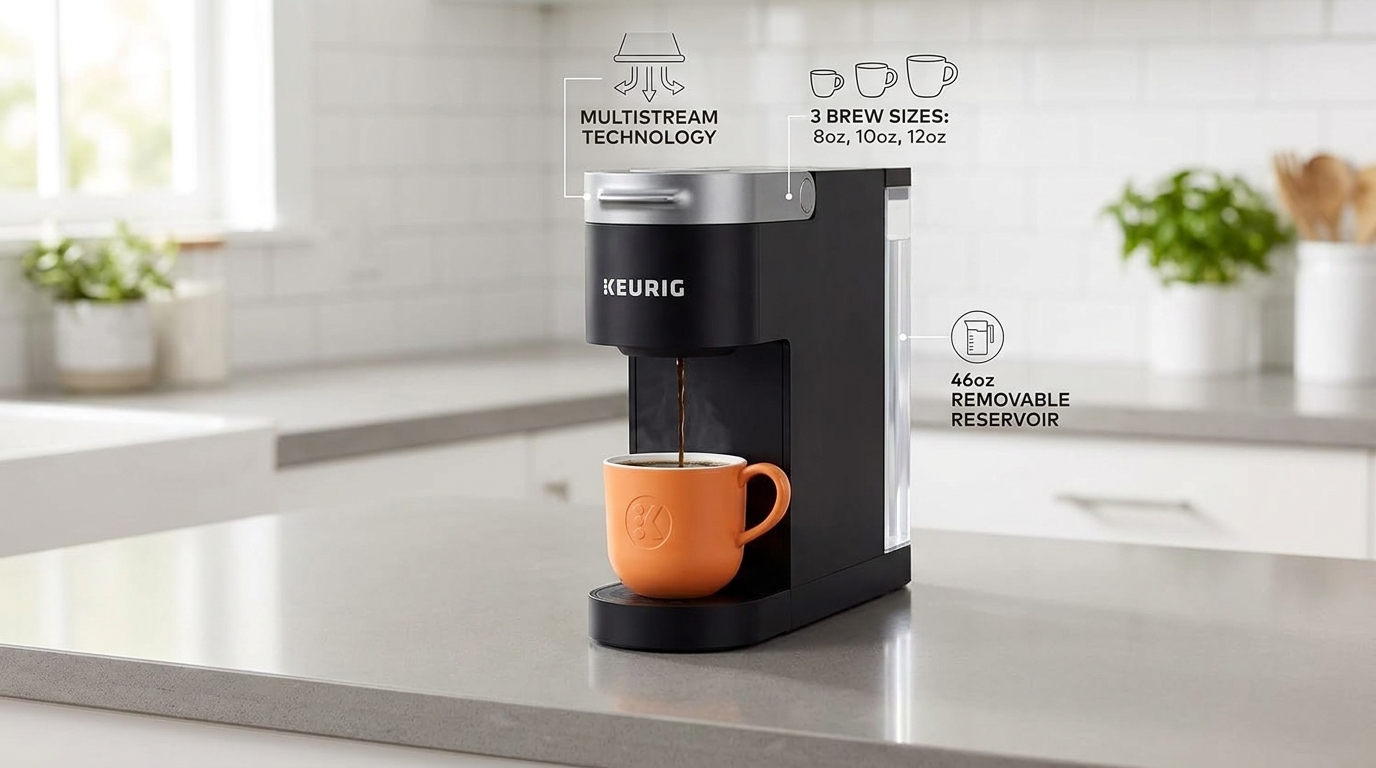
The Keurig K-Slim stands as one of the more thoughtfully designed options within this category. It’s worth understanding not just what this machine offers, but why its particular combination of features appeals to different types of coffee drinkers and home environments. This article explores the mechanics of single-serve brewing, examines what makes this specific model noteworthy, and helps you consider whether this approach to coffee preparation aligns with your lifestyle and preferences.
Understanding Single-Serve Coffee Technology
Before diving into the specific features of the K-Slim, it’s helpful to understand how single-serve brewing systems function and why they’ve become so prevalent in recent years.
Traditional coffee makers work by heating water and passing it through ground coffee in a filter, allowing gravity to pull the brewed coffee into a carafe. The process is straightforward, reliable, and has remained largely unchanged for decades. Single-serve systems operate on similar principles but with a different approach to water delivery and brewing containment.
Most single-serve brewers use pre-packaged coffee pods or capsules that contain precisely measured ground coffee and are sealed to maintain freshness. When you insert a pod and start the brewing cycle, the machine punctures the pod and forces hot water through the grounds at controlled pressure, extracting the coffee directly into your cup. This method offers several advantages over traditional brewing: reduced waste from unused coffee, quick preparation time, consistency from cup to cup, and the ability to switch between different coffee types for each brew without cleaning between batches.
The technology behind these systems has matured considerably. Early single-serve machines were sometimes criticized for producing weak coffee or creating excessive packaging waste. Modern iterations have addressed many of these concerns through improved water temperature management, enhanced extraction mechanisms, and the expansion of compatible pod options beyond the original branded options.
Key Features of the Keurig K-Slim
Compact Design and Kitchen Aesthetics
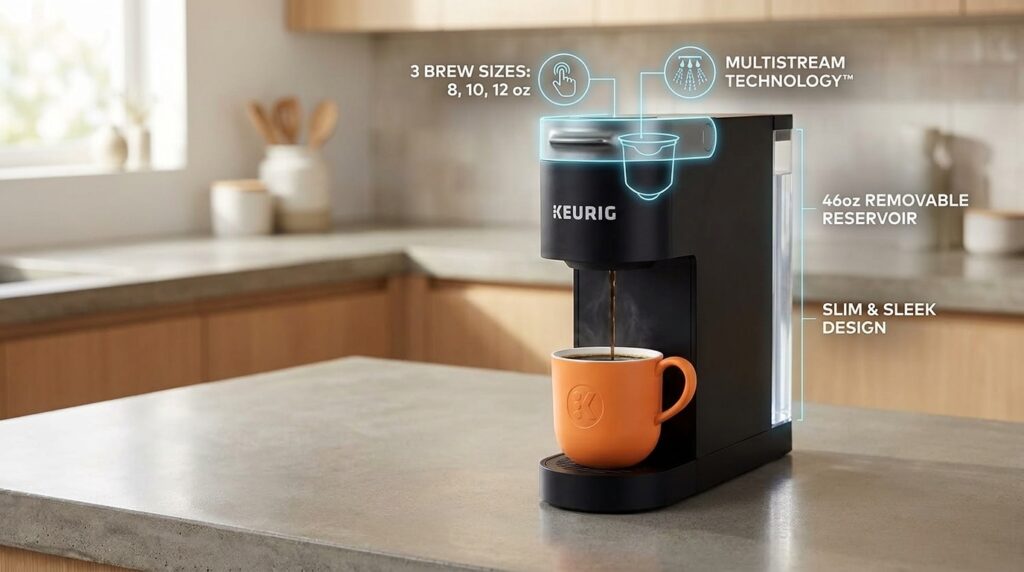
The name “K-Slim” directly references one of this model’s defining characteristics: its streamlined footprint. Kitchen space is a genuine consideration for many households, particularly in apartments, smaller homes, or kitchens where counter real estate is already claimed by other appliances. The K-Slim’s reduced width makes it possible to fit on counters where a standard-sized coffee maker might not work well, or to position it in spaces that would otherwise feel cramped.
Beyond mere space considerations, design matters in shared living spaces. A sleek, minimalist aesthetic tends to integrate more harmoniously into contemporary kitchen designs than bulkier appliances. The black finish of this model offers versatility, working with both modern and traditional kitchen styles without demanding attention or clashing with existing décor.
Multistream Technology Explained
One of the more technically significant features is Multistream Technology, which warrants explanation since it directly impacts the quality of coffee extraction.
Traditional single-serve brewers typically distribute water through a single point or simple spray pattern, which can result in uneven saturation of the coffee grounds. Some areas of the grounds receive more water contact than others, leading to over-extraction in some spots and under-extraction in others. This uneven extraction contributes to inconsistent flavor and can result in coffee that tastes either bitter (from over-extracted grounds) or thin (from under-extracted grounds).
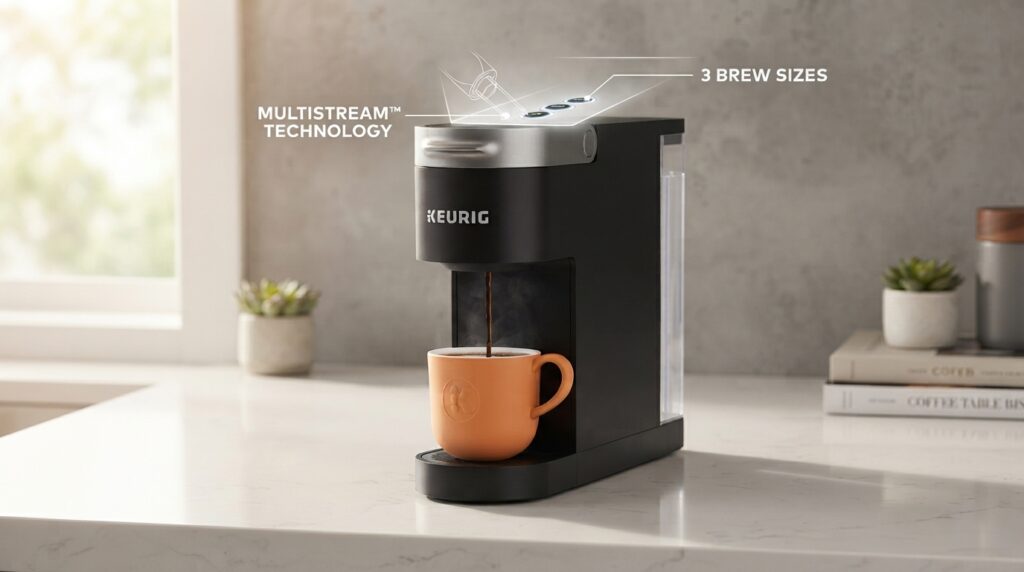
Multistream Technology improves upon this approach by distributing water through multiple streams across the entire surface of the coffee grounds. This more even distribution ensures that more of the grounds come into contact with hot water simultaneously, leading to more uniform extraction. The practical result is coffee that tastes more balanced and consistent, regardless of the specific pod or roast being used.
This feature addresses a common criticism of pod-based brewing systems—that the coffee doesn’t taste as good as traditionally brewed coffee. While pod-based systems will always involve some trade-offs compared to freshly ground coffee and manual brewing methods, improved extraction technology narrows that gap considerably.
Brew Size Flexibility
The three brew sizes available on this model represent a practical feature that accommodates different preferences and occasions:
Single Shot: This smaller brew size, typically around 6 ounces, appeals to those who prefer a concentrated coffee experience or want to prepare a quick caffeine boost without committing to a full cup. It’s also useful for creating the base for coffee drinks that combine coffee with milk and other additions.
Regular Brewed Cup: The middle option, usually around 8-10 ounces, represents the standard coffee cup size that most people envision when they think of a “cup of coffee.” This size strikes a balance between coffee strength and drinkability.
Large Mug: The largest setting, typically around 12 ounces, serves those who prefer a roomier portion or want their coffee diluted slightly while still maintaining adequate strength and flavor.
Having three options means that multiple people in a household can achieve their preferred coffee experience without adjustment or compromise. One person might prefer a quick morning espresso-style shot, while another wants a generous mug to sip while working. The machine accommodates both needs without any inconvenience.
Removable 46-Ounce Reservoir
The water reservoir is a practical component that influences the user experience more than some might initially realize.
A 46-ounce (approximately 1.4-liter) capacity means the machine can brew approximately four to five cups before requiring refilling, depending on which brew size is selected. This capacity strikes a balance between convenient refilling frequency and not requiring constant water additions throughout the day.
The removable design is particularly significant. Instead of refilling the machine’s built-in reservoir, you can remove the water tank entirely, carry it to your sink, fill it, and reattach it. This approach is simpler and faster than reaching around the machine to a fixed reservoir, particularly in kitchens where counter space is tight or the machine is positioned against a wall. It’s a small design decision that noticeably improves daily usability.
How Single-Serve Brewing Fits Into Modern Lifestyles
Understanding the practical applications of a machine like this goes beyond simply describing what it does—it requires considering the real-world scenarios where this approach to coffee brewing genuinely enhances daily life.
The Multi-Preference Household
Many households include people with different coffee preferences. One person might be a devoted black coffee drinker, while another prefers their coffee with specific ratios of milk and sugar. A third might be sensitive to caffeine and prefer decaffeinated options. A fourth household member might not drink coffee at all.
With a traditional coffee maker, accommodating these preferences means either brewing multiple pots throughout the morning or individuals preparing their own coffee using alternative methods. The single-serve approach eliminates this friction. Each person can select the specific coffee pod that matches their preference, brew exactly the amount they want, and move on—without anyone waiting for coffee to brew or feeling obligated to drink something they don’t actually want.
Home Office and Remote Work Scenarios
The shift toward remote work has changed how people approach their morning routines and work-day structure. Without a commute, people start working at varying times. Some might begin very early, others later. Some take long breaks at midday, others work through lunch and take breaks at different times.
A single-serve brewer accommodates this flexibility well. Someone can brew a quick cup whenever their work break occurs, without needing to plan ahead or brew a full pot. For those who work from home, having access to fresh coffee throughout the day without the complexity of traditional brewing is genuinely convenient.
Guest Hosting and Entertaining
When hosting guests, offering quality coffee reflects hospitality. A single-serve machine allows you to brew custom coffees for each guest—one person gets a strong black coffee, another gets a smaller cup of an alternative roast, someone else might want a flavored variety. It’s more efficient than attempting to accommodate multiple preferences with a single-pot approach and shows attentiveness to individual preferences.
Dorm Rooms and Small Living Spaces
College students and young adults in their first apartments often lack kitchen infrastructure. A compact single-serve brewer occupies minimal space, requires no complex setup, and allows independent coffee preparation without depending on shared kitchen appliances or roommate schedules. The slim design makes this machine particularly suited to tight quarters where a full-sized coffee maker wouldn’t fit.
Reducing Waste and Consistency
For individuals concerned about waste and committed to consistent quality, single-serve brewing addresses a real problem. Traditional coffee makers often result in partially consumed pots that get discarded. With single-serve brewing, you prepare exactly what you’ll consume, eliminating that particular form of waste. Each cup brews fresh rather than sitting in a carafe for hours, which also maintains flavor and temperature better.
Who Might Find This Approach Suitable
Beyond the specific scenarios mentioned above, certain characteristics tend to indicate whether someone would genuinely benefit from this type of coffee maker.
People who value convenience and speed: If your morning routine is structured and busy, and you prioritize getting quality coffee quickly without complexity, single-serve brewing delivers on that priority. The time from decision to holding a cup of coffee is typically measured in minutes, and there’s minimal cleanup.
Individuals with specific flavor preferences: People who know their coffee preferences precisely often appreciate single-serve systems because they can select pods that match their specific taste profile—particular roasts, origins, or flavor profiles—without compromise. There’s no averaging with someone else’s preferences.
Those living in small spaces: Apartments, tiny homes, and kitchens with limited counter space benefit from the K-Slim’s compact design. If you’ve previously thought a coffee maker was incompatible with your living space, the slim profile might change that calculation.
Households with multiple coffee drinkers with different preferences: As mentioned earlier, the flexibility to accommodate varied preferences without friction makes single-serve systems particularly well-suited to these environments.
Health-conscious individuals: People monitoring caffeine intake can brew smaller servings or select decaffeinated options more easily with single-serve systems. The portion control is more precise than with traditional brewing.
People who don’t drink coffee daily: If someone drinks coffee occasionally rather than every morning, they might find single-serve systems more convenient than brewing a full pot and wasting most of it.
Important Considerations Before Choosing This Approach
Honest evaluation also requires acknowledging aspects where single-serve brewing presents different trade-offs compared to traditional methods.
The Ongoing Cost of Pods
While the machine itself is reasonably priced, the per-cup cost of coffee via pods is generally higher than brewing from ground coffee. If you drink multiple cups daily and cost is a significant consideration, the cumulative expense of pods over time can become noticeable. Some manufacturers offer reusable pod alternatives that can help reduce this cost, though this requires additional effort and planning.
Environmental Considerations
Single-use pods create packaging waste. While many pod manufacturers have responded to environmental concerns by making pods recyclable or compostable, the system still generates more waste per cup than purchasing bulk coffee or using reusable brewing methods. If environmental impact is a primary concern, this represents a genuine trade-off worth weighing.
Flavor Complexity
While modern single-serve brewing has improved substantially, some coffee enthusiasts maintain that the results don’t quite match what’s achievable through manual brewing methods like pour-over or French press. The difference is usually subtle, and many people find pod-brewed coffee entirely satisfactory, but those with advanced palates might notice distinctions.
Dependency on Pod Availability
Single-serve systems function only if compatible pods are available. While the market for compatible pods has expanded significantly, you remain dependent on manufacturing and distribution of compatible products. This is unlikely to change, but it’s worth acknowledging that you’re not independent from the supply chain in the way you would be with a traditional coffee maker and bulk coffee.
Water Temperature Consistency
Some users report that the water temperature can occasionally vary, particularly with consecutive brews. This isn’t universal and doesn’t affect most users’ experience, but if you’re particular about water temperature for brewing—which does impact extraction—this is worth considering.
How Single-Serve Brewing Compares to Other Coffee Methods
Understanding how single-serve brewing fits into the broader landscape of coffee preparation options provides useful context.
Versus Traditional Drip Coffee Makers
Traditional drip brewers offer lower per-cup cost and less packaging waste. They’re ideal for households where everyone prefers the same coffee and drinking patterns align. However, they’re less convenient for accommodating multiple preferences and can result in waste when pots aren’t fully consumed.
Single-serve systems reverse these trade-offs: higher per-cup cost and more packaging, but better for varied preferences and reduced waste of unconsumed coffee.
Versus Manual Brewing Methods (Pour-Over, French Press, AeroPress)
Manual brewing methods offer maximum control over variables like water temperature, contact time, and grind size, typically resulting in highly customizable coffee that many enthusiasts prefer. However, they require more time, attention, and cleanup than single-serve systems.
If coffee brewing is a valued ritual or hobby, manual methods offer more engagement. If you view coffee as a beverage to consume quickly while doing other things, single-serve systems are more aligned with that priority.
Versus Espresso Machines
True espresso machines produce concentrated coffee shots through high-pressure extraction and offer sophisticated options for milk-based drinks. However, they require skill, practice, and significantly more investment. Single-serve systems are more approachable for casual users seeking quick, consistent results without the learning curve.
Versus Coffee Subscriptions and Café Culture
Some people primarily get coffee from cafés or coffee subscription services. Single-serve home brewing offers cost savings and convenience for regular consumption, though it lacks the social aspect and expertise that cafés provide. Many people combine both approaches—casual home brewing with occasional café visits.
Frequently Asked Questions
How long does brewing actually take?
From start to holding a ready-to-drink cup, the process typically takes two to three minutes, including the time for the machine to heat water. This varies slightly based on brew size selected and whether the machine is already warmed up from a previous brew.
What if I don’t like the taste of coffee from pods?
Taste is subjective, and pod coffee quality varies by brand and roast. Many people find pod-brewed coffee satisfactory, while others prefer fresher-ground or manually brewed options. The Multistream Technology in this model is designed to optimize extraction, which improves flavor compared to earlier single-serve systems.
Can I use any pod with this machine?
The K-Slim uses K-Cup compatible pods, which has become the most widely available pod standard. Numerous manufacturers produce compatible pods beyond the original Keurig brand, providing variety in price points, roasts, and flavors. However, you’re not compatible with pods designed for other single-serve systems.
How often does the machine need descaling?
Hard water mineral buildup is the primary maintenance consideration for any machine that heats water. Descaling frequency depends on your water hardness; some areas require monthly descaling while others might only need it quarterly. Keurig produces descaling solutions designed for their machines, and this maintenance is straightforward.
What if someone in my household doesn’t drink coffee?
The machine brews water on demand, which can be used for tea, hot chocolate, or other hot beverages. Many people use their single-serve brewers for multiple hot drink applications beyond coffee.
Is the 46-ounce reservoir capacity adequate?
For most users, yes. This capacity allows four to five brews before refilling, which covers most morning routines. If you’re brewing every hour or have a very large household, you might refill more frequently, but this is straightforward with the removable design.
Do I need special accessories or ongoing supplies beyond pods?
Descaling solution is the primary ongoing supply. Some users prefer additional accessories like larger-capacity water reservoirs or reusable pods, but these are optional enhancements rather than requirements.
How much counter space does the K-Slim actually require?
The slim design substantially reduces width compared to standard single-serve brewers. Exact dimensions vary, but the reduced footprint makes it viable in kitchens where traditional coffee makers wouldn’t fit comfortably. Measuring your available space before purchasing is recommended.
Can multiple people use the same machine, or is it really single-serve?
“Single-serve” refers to the brewing process—each cup is brewed individually—not to exclusive user access. Multiple people can absolutely share a machine throughout the day, simply selecting their preferred pod and brew size each time.
The Role of Single-Serve Brewing in Contemporary Coffee Culture
It’s worth noting that single-serve coffee makers don’t represent a decline in coffee culture or a rejection of quality. Rather, they represent an acknowledgment that not everyone approaches coffee the same way. Some people view coffee preparation as a meaningful ritual and hobby; others view it as a necessity on the way to other activities.
Modern coffee culture has enough room for both perspectives. Espresso enthusiasts, pour-over devotees, and single-serve users can all exist without conflict. Each approach optimizes for different priorities—engagement and control, flavor and tradition, or convenience and flexibility.
The Keurig K-Slim, with its thoughtful design and improved extraction technology, serves people who’ve prioritized convenience and preference flexibility. For those people, it represents a meaningful improvement over earlier single-serve options and a practical alternative to traditional brewing methods.
Conclusion
The decision to adopt single-serve coffee brewing isn’t about choosing the objectively “best” coffee experience—such a thing doesn’t exist, because different people have different priorities. Rather, it’s about aligning your coffee preparation method with your lifestyle, preferences, and values.
The Keurig K-Slim presents a mature single-serve brewing option that addresses several practical concerns: space efficiency through its slim design, improved flavor through Multistream Technology, and flexibility through three brew sizes. It works well for households with multiple coffee preferences, people living in small spaces, and those who value quick, straightforward coffee preparation over extensive ritual or customization.
Understanding what this machine offers—and acknowledging what it doesn’t offer—helps you make an informed decision. If the convenience, flexibility, and space efficiency appeal to your situation, this represents a solid option within its category. If you prioritize flavor customization, environmental minimization, or cost reduction, you might explore alternatives.
There’s no universally right answer in coffee equipment choices. There’s only the right answer for your specific circumstances, preferences, and priorities. Once you’ve considered those factors honestly, you’re positioned to make a choice that genuinely improves your daily routine.