Introduction
The evolution of home coffee brewing has taken many forms over the past couple of decades. From traditional drip machines to espresso makers, French presses, and pour-over methods, coffee enthusiasts have no shortage of options. However, one category that has gained considerable traction is single-serve pod-based brewing systems. These machines appeal to people who want convenient, consistent results without the complexity of traditional brewing methods or the waste associated with brewing a full pot when you only need one or two cups.
The Keurig K-Mini Mate represents a particular approach to this market segment: a compact, portable machine designed specifically for people with limited counter space or mobility needs. Whether you’re living in a dorm room, working from a small office, traveling frequently, or simply prefer minimalist kitchen setups, understanding how this type of machine works and whether it aligns with your lifestyle can help you make an informed decision about your coffee brewing habits.
This article explores the practical aspects of single-serve pod brewing, examines what distinguishes machines like the K-Mini Mate, and considers the real-world implications of choosing this method for your daily caffeine needs.
Understanding Single-Serve Pod Coffee Systems
Before diving into specifics about one particular machine, it’s worth understanding the broader landscape of single-serve brewing technology. These systems operate on a straightforward principle: they use pre-measured pods or capsules containing ground coffee, which are inserted into the machine, and hot water is forced through the pod directly into your cup.
The appeal is obvious to anyone who’s ever found themselves with a half-full pot of coffee that’s been sitting on a warming plate for hours, or who’s had to make an entire pot when they only wanted one cup. Single-serve systems eliminate these scenarios. You get a fresh cup without waste or the need to commit to a larger brewing process.
However, these systems also represent a trade-off. The convenience and consistency come with certain considerations regarding cost per cup, environmental impact, and the flavor profiles available through pre-ground, pre-measured coffee versus fresh-ground beans prepared through other methods.
Key Features of the Keurig K-Mini Mate
The K-Mini Mate is designed around a specific use case: providing reliable, convenient brewing in spaces where traditional full-size coffee makers simply won’t fit or aren’t practical.
Compact Footprint
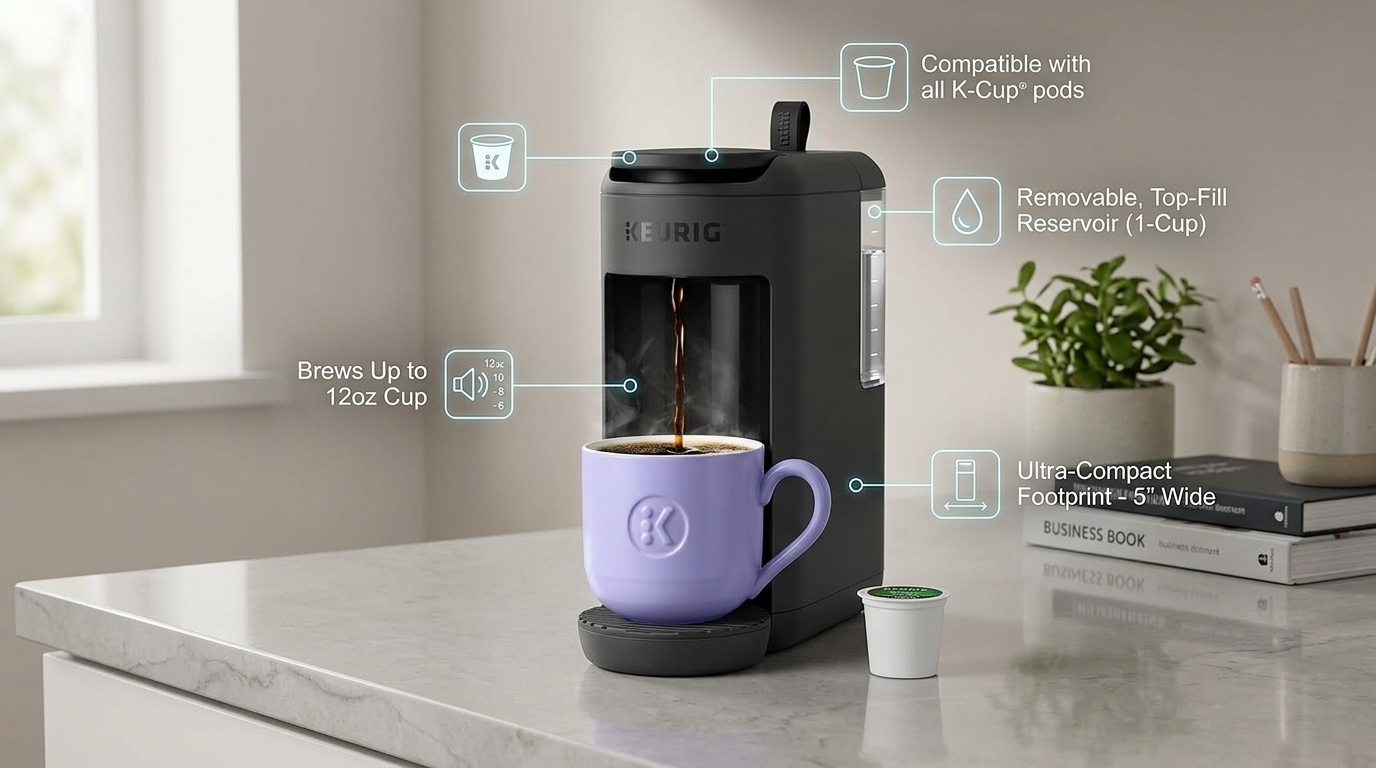
The most immediately apparent feature is the machine’s small size. A standard kitchen countertop can quickly become cluttered when you add appliances of various sizes. The K-Mini Mate occupies minimal space—approximately similar to a toaster in terms of footprint. This makes it practical for apartments, dorm rooms, office kitchenettes, or RVs where every inch of counter space has value.
Brew Capacity
This model brews up to 12 ounces, which accommodates a standard coffee mug or a slightly larger cup. This differs from some single-serve systems that brew only 8 ounces. The additional capacity means you can prepare a more substantial cup in one cycle rather than having to fill a mug partway and adjust it to your preference.
Pod Compatibility
Like other machines in the Keurig ecosystem, this model uses K-Cup pods. This means you’re not limited to a single brand or roaster—the K-Cup pod format has become something of an industry standard, with countless options available from major coffee companies, specialty roasters, and store brands. This variety is relevant because it directly affects the flavor profiles and coffee options available to you over time.
Portability Considerations
The machine’s compact size and lighter weight compared to full-size brewers make it more moveable than traditional coffee makers. If you travel between locations or need to move your setup periodically, this becomes a practical advantage. The relatively modest water capacity and electrical requirements also contribute to its portability.
Basic Operation
The brewing process is straightforward: fill the water reservoir, insert a K-Cup pod, place your cup on the drip tray, and select your desired brew size. The machine handles the heating and water pressure automatically. There are no complicated settings, programmable timers, or features that require a learning curve.
How Single-Serve Brewing Actually Works
Understanding the mechanics behind single-serve pod brewing can help you set realistic expectations about what the machine can and can’t deliver.
When you initiate a brew cycle, the machine heats water to the appropriate temperature—typically around 192 to 202 degrees Fahrenheit for optimal extraction. The water is then forced through the punctured pod at pressure, which facilitates the extraction of flavors and compounds from the ground coffee. The entire process typically takes between one and three minutes, depending on the brew size and the specific machine’s design.
The consistency of single-serve brewing stems from the standardization of the pod itself. Each K-Cup pod contains a measured amount of pre-ground coffee, and the machine applies consistent temperature and pressure. This means that brewing the same pod type repeatedly should produce similar results—something that’s harder to guarantee with manual brewing methods where numerous variables (water temperature, grind size, brew time, technique) can vary.
However, this consistency comes with a trade-off: the coffee in each pod has already been ground. Grinding exposes more of the coffee’s surface area to air, which can lead to faster oxidation and loss of volatile aromatic compounds. Fresh-ground coffee, brewed shortly after grinding, typically offers more complex flavor development.
Practical Usage Scenarios
The K-Mini Mate’s design points to several real-world situations where it serves a practical function.
Dorm Life and Student Housing
College dormitories typically have strict limitations on what appliances residents can have in their rooms. Large coffee makers often violate fire codes or storage guidelines. A compact single-serve brewer like the K-Mini Mate fits within these constraints while still allowing students to brew their own coffee rather than relying solely on dining hall options or frequent trips to campus coffee shops.
Students also appreciate the straightforward operation—no maintenance beyond occasional descaling, no complicated cleaning procedures, and minimal learning curve. For someone juggling classes, part-time work, and other responsibilities, simplicity in daily routines has genuine value.
Small Apartment Kitchens
Urban apartments, particularly in expensive housing markets, often feature compact kitchens where counter space is genuinely limited. In these situations, a full-size coffee maker might mean sacrificing space for a toaster, microwave, or other essential appliance. A smaller brewing solution allows you to maintain coffee access without this trade-off.
Office Environments
While many offices have shared coffee stations or break room equipment, individual office spaces vary widely. Some people prefer having a personal brewing solution at their desk or in a small office. This allows for brewing exactly when you want it, without depending on shared equipment schedules or dealing with communal coffee preparation.
Travel and Mobile Situations
People who spend considerable time in hotels, on boats, in RVs, or in other temporary accommodations often appreciate having familiar coffee-making equipment with them. The K-Mini Mate’s portability makes this feasible in ways that full-size machines don’t.
Flexible Household Brewing
In homes with multiple bathrooms or spaces, having a secondary brewing station in a bedroom, home office, or secondary kitchen can be practical. Some households use their primary coffee maker for morning preparation but appreciate having a personal brewer for afternoon cups or less frequently used spaces.
Who This Machine May Be Suitable For
Identifying whether a particular appliance aligns with your lifestyle requires honest assessment of your actual needs and habits rather than idealized versions of how you’d like to behave.
This type of machine may work well for you if you typically brew one or two cups at a time rather than full pots. If you’ve found yourself regularly discarding cold, undrunk coffee from traditional brewers, single-serve brewing eliminates that waste directly.
It may also be suitable if you have limited counter or storage space, or if you move frequently and appreciate appliances that travel easily. People with very specific taste preferences can also benefit from the variety of K-Cup options available, allowing them to switch between different roasts and flavors without committing to a full bag of beans.
The machine may be less ideal if you regularly brew large quantities—say, if you make a pot each morning for multiple household members. In that scenario, the per-cup cost and brewing time add up compared to a traditional larger machine. Similarly, if you have strong preferences about coffee freshness and the characteristics of freshly ground beans, the pre-ground nature of pod-based coffee may not align with your standards.
Environmental consciousness is another consideration. Some people are comfortable with pod-based brewing and its associated packaging waste, while others prefer methods with less packaging. This is a personal value question rather than a factual consideration.
Important Practical Considerations
Cost Per Cup
Single-serve pod brewing typically costs more per cup than other brewing methods when you account for the price of individual pods versus bulk coffee beans. This isn’t necessarily a problem—the convenience may justify the additional cost for your situation. However, it’s worth factoring into your decision. If you brew ten cups daily, the cumulative cost difference becomes substantial over months and years.
Water Quality and Maintenance
The machine requires water, and like most coffee makers, it benefits from descaling periodically. Hard water (water with high mineral content) can cause mineral buildup inside the machine, which affects performance and longevity. Many people in areas with hard water benefit from using filtered or bottled water in their coffee makers, or running descaling cycles more frequently.
The K-Mini Mate has a relatively small water reservoir, which means you’ll need to refill it fairly frequently if you’re brewing multiple cups throughout the day. This isn’t a significant drawback, but it’s worth noting if you prefer not to think about refilling water.
Pod Availability and Consistency
While K-Cup pods are widely available, you’re dependent on the pod format continuing to exist as an industry standard. You’re also at the mercy of different pod manufacturers and brands—some pods deliver better results than others, and your favorite option might be discontinued or become harder to find over time.
Limited Customization
With a single-serve pod system, you’re limited to the coffee and roast profile that someone else selected for you. You can’t adjust the grind size, can’t use half a pod if you want a weaker cup, and can’t blend different beans. If you enjoy the customization aspect of coffee preparation, this limitation may feel constraining.
Temperature Considerations
The water that comes out of single-serve brewers is typically very hot. If you’re someone who likes to drink their coffee immediately, this can be a minor inconvenience. Some people pour their coffee into a cup and wait before drinking; others prefer their coffee at a slightly cooler temperature than the machine delivers initially.
Durability and Longevity
Compact machines sometimes face durability questions compared to larger, heavier-duty equipment. The K-Mini Mate’s actual lifespan depends on usage frequency, water quality, maintenance practices, and individual unit variation. As with any appliance, treating it well—regular descaling, proper storage, using filtered water—supports longer operational life.
The Economics of Pod Brewing Versus Other Methods
It’s worth considering the actual financial implications of different brewing methods if cost is a consideration for you.
A traditional drip coffee maker requires minimal equipment investment and uses ground coffee from bags. The cost per cup is typically lower than pod-based brewing—sometimes significantly lower if you buy coffee in bulk or subscribe to regular deliveries.
French press brewing and pour-over methods require similar per-cup costs to traditional drip machines. They do require slightly more hands-on time and attention, but many people consider this a feature rather than a drawback.
Espresso machines and more sophisticated brewing equipment represent a larger upfront investment but can provide lower per-cup costs if you use them frequently and buy coffee strategically.
Single-serve pod systems fall into a middle ground—higher per-cup cost than bulk methods, but with convenience benefits that some people value sufficiently to justify the premium. Whether this makes financial sense depends entirely on your priorities and how much you value the convenience factor.
Broader Context: The Single-Serve Coffee Ecosystem
The K-Mini Mate exists within a larger ecosystem of single-serve brewing options. Understanding this context helps clarify why you might choose this specific approach.
Some competing systems use different pod formats, each with their own selection of available coffee options. Others focus on compact design but may offer different brew volumes or features. Some machines offer programmable brewing, different temperature settings, or additional features beyond basic pod insertion and button pressing.
The decision between machines often comes down to which specific combination of features, size, pricing, and compatible coffee options aligns best with your particular situation. A comprehensive comparison isn’t about identifying an objectively “best” machine—it’s about finding the machine that best solves your specific problem.
For example, if size is your primary concern, the K-Mini Mate’s compact footprint becomes the most relevant feature. If you prioritize consistent quality and want fine-grained control over brewing parameters, you might prioritize different machines with more customization options. If cost per cup is paramount, you might skip pod-based systems entirely.
Frequently Asked Questions About Single-Serve Pod Brewing
How often does the machine need descaling?
Descaling frequency depends on your water quality. In areas with soft water, descaling every three to six months may suffice. In areas with hard water, you might need to descale monthly or more frequently. The machine will typically signal when descaling is needed. Following the manufacturer’s descaling instructions maintains optimal performance.
Can you use reusable K-Cup pods instead of disposable ones?
Yes, reusable K-Cup pods exist and allow you to use your own ground coffee. This addresses some of the cost and environmental concerns associated with disposable pods. However, reusable pods require cleaning after use and may produce slightly different brewing results depending on how you fill them and what grind size you use.
What’s the actual environmental impact of pod-based brewing?
This is complex. On one hand, disposable pods contribute to landfill waste and require manufacturing and shipping, all of which carry environmental costs. On the other hand, single-serve brewing prevents the waste of full pots of undrunk coffee, which also has environmental implications. Some analyses suggest that the waste reduction from not brewing excess coffee can offset some pod-related waste. Reusable pods reduce but don’t eliminate these considerations.
How does the coffee taste compared to other brewing methods?
This is subjective and depends on the specific pod you choose, your taste preferences, and what you’re comparing it to. Many people find pod coffee satisfactory for daily drinking. Specialty coffee enthusiasts often prefer freshly ground, carefully prepared coffee from other methods. The best approach is trying different pod options to see if they meet your flavor preferences.
Can the machine brew larger quantities?
The K-Mini Mate is designed for individual cups up to 12 ounces. If you regularly need larger quantities, a full-size brewer would be more practical.
Is the machine portable enough for travel?
The compact size and modest weight make it more portable than full-size brewers. However, it still requires electricity and water access. For true portability without power access, other brewing methods like pour-over or AeroPress might be more practical.
What’s the warranty and support situation?
Warranty terms vary, and you should check the current terms from the manufacturer or retailer. Manufacturer support for single-serve machines is typically straightforward given their simple operation, but it’s worth confirming before purchasing.
Conclusion
The Keurig K-Mini Mate represents a legitimate solution for a specific set of circumstances: situations where space is limited, convenience is valued highly, and single-cup brewing aligns with your daily coffee consumption patterns. It’s not a universally optimal choice—such a thing doesn’t exist in coffee brewing, where different methods serve different priorities.
The machine excels at what it’s designed to do: brew a single cup of consistent coffee in a compact footprint with minimal complexity. Whether this matches your actual needs requires honest assessment of how you actually drink coffee, how much counter space you actually have, and whether the per-cup cost aligns with your budget.
Single-serve pod brewing has fundamentally changed how some people approach their daily coffee, while others continue to prefer traditional methods. Both perspectives are valid. Your decision should rest on practical considerations about your lifestyle, your preferences, and your values, rather than external pressure about which method is “best.”